
rape of the penan girls and women
UPDATED: apart from the 3 malaysiakini report posted originally, now updated with the latest one – ‘penan rape report: NGOs have an open agenda‘. scroll down to read.
2ND UPDATE: ‘what can we do about old cases?’ where the police got angry at the report, saying the rape cases happened 10 years ago. scroll down to read.
ORIGINAL POST
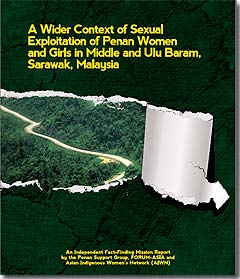
oh no! it’s the penans of sarawak again. remember my earlier post ‘bullying the penans‘? it’s about how the penans were forced out of the homes because of the bakun dam project. now this news of penang women getting raped by loggers surfaced… again. yes, sometime back there were already report of penan women who were raped by loggers and now this issue is highlighted again because a group of 36 NGOs, calling themselves the ‘penan support group’ (PSG) came out with a report (see picture above – click on it to go to the report).
long ago when the rape of the penan women were first brought up, the state ministers had brushed it aside. the super-damn-rich-while-his-rakyat-suffered CM, the white haired man, accused those who reported the rape of trying to sabotage the people of sarawak. the land development mniister said the penan are very goos story teller and many of the penan women are promiscuous at a young age. the deputy minister in charge of islamic affairs said the report of the rape was not true at all.
denial. denial. denial. why? of course – like my earlier blog post tittle ‘bullying the penan’ or in orther words the penans are being marginalised. because they are the minority people, the govt see it fit to ignore them, to not believe in what they said. and do you know what? the police seemed to be on the loggers’ side instead of the penan. the ministers played deaf and dumb, the police played deaf and dumb – why? for sure, for one thing is because those logging companies are ‘big time rich’ people so you know lah…..
thank god we have the PSG who had done a very detailed report of the ordeal of the penan women and their communities. they released the report in parliament yesterday.
read all about this issue from malaysiakini, which i have CnP here. the first article ‘new evidence uncovered of penan rape’ tells generally of the issue. the second article ‘penan rape survivors recall harrowing ordeal’ have stories from the rape victims. the third and last article talk about PKRs planning to table an emergency motion to the dewan rakyat next week to discuss the reported rape of penan women by loggers and the plight of the indigenous communities in the country. do read them so that you’ll be aware of the issue and be enlightened by the plights of the penan. there is also a video.
———————————————————————————————————
Malaysiakini
‘New evidence’ uncovered of Penan rape
Keruah Usit
Jul 6, 10
2:26pm
Systematic sexual abuse by loggers continues in Sarawak despite denials by the state government with seven additional Penan victims coming forward to seek justice.
The Penan Support Group (PSG), a coalition of 36 NGOs, released an intricately researched report in Parliament today, describing the distressing ordeals of the Penan women and their communities.
The hard-hitting report said the sexual crimes are “allowed to flourish” because of widespread poverty, deprivation of land rights, citizenship and basic services, as well as lack of respect for rural communities, their autonomy and their calls for justice.
The PSG also highlighted the failure of authorities to respond to the shocking findings of a national ministerial task force.
The task force report, initially kept under wraps by the cabinet, was finally made public last September by the Women, Family and Community Development Ministry, after coming under pressure from PKR Women’s chief Zuraida Kamaruddin.
The ministry’s task force had confirmed eight instances of loggers sexually abusing Penan girls and women, including a 10-year-old schoolgirl.
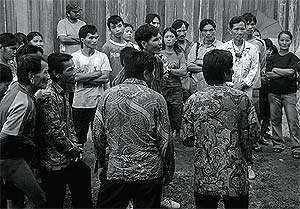
The PSG’s own fact-finding mission ensued after the police reneged on a promise to investigate the sexual attacks by loggers, claiming a lack of funds.
The PSG visited Long Lamam, Long Ajeng and Long Mobui, over a week last November, and heard testimonies from members of 13 Penan communities gathered there, from Middle and Upper Baram.
The seven sexual abuse survivors interviewed by the PSG had never been documented previously. The youngest said she was only 14 when she was attacked. These seven women are further additions to the eight girls and women reported by the ministry’s national task force.
The rapes of the Penan have drawn international condemnation, but have been brushed off by state ministers.
Chief Minister Taib Mahmud warned angrily, “check your information or you will be suspected by the decent people of Sarawak of trying to sabotage us”.
Land Development Minister James Masing told the BBC that “the Penan are very good story-tellers” and suggested that the Penan are promiscuous at a young age.
Daud Abdul Rahman, a deputy minister in charge of Islamic affairs, was more concise: “To me, the reports of the sexual abuse of Penans are not true”.
Wider context of abuse
The PSG fact-finding mission brought in representatives from the Asian Forum for Human Rights and Development, Tebtebba and the Asian Indigenous Women’s Network, the Malaysian Bar Council, Suaram and the Centre for Orang Asli Concerns and Sarawakian NGOs.
“The mission found that women were willing to share their stories, but they did not want to go to the authorities owing to the police’s lackadaisical responses in the past and further obstacles including the lack of identity cards, language barriers and the prohibitive cost of travel,” said John Liu (left) of Suaram.
The PSG report portrayed a pattern of sexual violence, with the common themes of rape, deception, abduction, beatings, emotional abuse, coercion into fake marriages and desertion upon pregnancy.
The loggers were said to have behaved like predators: they intruded into Penan villages at will, entering houses without consent, or abducting their victims and taking them to logging camps.
The PSG underscored the wider context of the loggers’ intrusion into native lands that has facilitated the sexual crimes and has further impoverished rural Sarawakian communities.
“Logging and other land exploitation has not just cost communities, like the Penans loss of control over land…but also loss of control over decisions affecting their present and future lives,” the report argued.
“The close relationship between timber companies and the ruling political elite – ‘timber politics’ – has long been acknowledged and many have argued that this has meant that the political will to monitor and enforce the law, to ensure sustainable and legal forestry practices, is fatally compromised.”
The report pointed out criticisms of Sarawak’s poor monitoring of logging and low standards of forestry, including those outlined in the 2008 Auditor-General’s Report.

“Logging is extensive, lucrative and in the hands of a few companies close to the ruling political elite,” the report stated.
“There is the argument that tax evasion has diverted much of the resource exploitation proceeds from the state (which could then have been used for capital accumulation or poverty alleviation programmes) to the pockets of politicians and corporations.”
The PSG quoted Suhakam’s 2007 account of the neglect of the rights of Sarawak’s indigenous people:
“While Suhakam recognises that logging and oil palm plantation activities contribute to the country’s development, it appears that the Penans do not benefit from this.
“Rather, logging, oil palm plantation and forestry activities have added constraints on the development of the Penans and has further displaced this community given their distinct economic, social and cultural life… the survival, livelihood and development of the Penans is further stunted as a majority of them live in abject poverty.”
Endemic lawlessness
The PSG described endemic lawlessness in Baram, because the logging companies are let loose to do as they please.
“Attempts to protect their land and their land rights, culture and future sustainability (have) often brought the Penans into conflict with both state authorities and logging companies, such conflict being often conducted with threats and intimidation… and on occasion with actual violence,” the PSG report said.
“This environment of violence gives an important wider context to the sexual violence perpetrated against Penan women and girls,” the PSG explained.
The PSG’s recommendations included a royal commission into indigenous people’s land issues.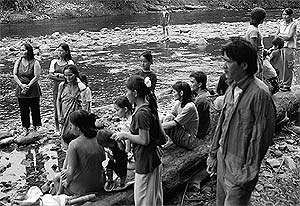
The PSG urged concrete action to improve extremely poor access to health, education, national registration, transportation and clean water.
It called on the federal and state governments to adopt a new model of development, one that incorporates respect for these rural communities’ values, culture and rights to self-determination and redress.
The PSG also asked for action by intergovernmental bodies, Parliament and the state assembly, Suhakam, Bursa Malaysia, and local NGOs to provide impetus to reform land rights and stop violence against rural indigenous communities.
The report concluded that “the way forward is simply to reverse the lack of respect and protection. A starting point is suggested by the remark by one of the women from Long Item: ‘The ultimate solution is to revoke the logging licences.’”
Photos: Penan Support Group
———————————————————————————————————
Malaysiakini
Penan rape survivors recount harrowing ordeal
Keruah Usit
Jul 6, 10
2:42pm
Testimonies from survivors of alleged sexual abuse by loggers in the Penan Support Group (PSG) fact-finding mission make for unsettling reading.
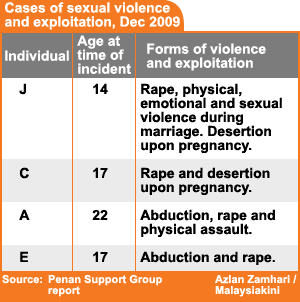
The report, alleging sexual abuse of Penan girls and women by loggers, was released in Parliament today by the PSG, a coalition of 36 NGOs.
Penan girls and women are vulnerable to sexual violence and exploitation because of the influx of timber tracks and loggers to forests surrounding their villages, and the grossly unequal power relationships that ensue.
J’s story
According to the PSG report, J is a 23-year-old Penan. As the only daughter in her family, sometimes she would be left alone at home while other family members went out hunting. According to J, many loggers would often visit her village, and sometimes they would be drunk and “create chaos”.
J was raped when she was 14 by a logger. The logger, in his 30s, had proposed marriage but she had refused him. One night he returned to J’s house and raped her. J did not tell her family about the rape because she was afraid the logger might kill her family.
He persisted in his proposals even after the alleged rape, telling her that “you have already slept with me, it’s better for you if you marry me.” Eventually she gave in to his demands for her to marry him, as she was worried for her family’s safety.
J says the logger abused her physically and psychologically. If she refused him sex, he would beat her, sometimes with a stick. When she fell pregnant in 2003, he sent her back to her village and then he disappeared.
J did not want to return to the camp to look for him because, she said, “I don’t know how to get there and I don’t want to see him again.” She is looking after her child, now seven. She feels the logger has ruined her life and does not want to re-marry, because she does not trust men.
She wants to focus her energy on her child. She hopes the child will go to school and then help protect the Penan community from exploitation by outsiders.
C’s story
C, now 24, was tricked into marrying a logger when she was 17. The logger told her he was single, and persuaded her to allow her village headman to conduct a ceremonial, unregistered, marriage.
The logger’s fellow workers later told C he was already married and had four children. He denied this, but disappeared later when C was three months pregnant.
C remains angry with the man because he cheated her. She married a Penan man in 2007, and has a two-year-old daughter with him. Her husband treats her well, though she remains worried about money to educate her children.
C says camp workers often come to her village in groups of three or four, looking to “main perempuan” (harass girls).
Under Section 375 (c) of the Criminal Procedure Code, procuring a sexual relationship under the pretense of promising to marry a person, when in fact the perpetrator is already married, falls under “misconception of fact” – a criminal offence of rape, even if consent is obtained.
A’s story
A was abducted, together with her sister, after two logging employees broke into their house in 2001. The sisters were forced into a vehicle and taken to a logging camp.
A was separated from her sister in the camp. She was beaten and raped almost daily for a week. Someone in authority at the camp discovered her plight and sent her back to her village. She was pregnant by then.
Currently, A’s elder sister has been caring for A’s child, since A gave birth. A is ill and cannot work. She has not seen the logger since escaping from the camp and has remained single. She considered making a police report but could not, because she simply did not know how, and did not have the money to travel to the police station.
The headman and villagers went to the camp following A’s escape home, but were unable to find A’s sister, or the loggers who had abducted them.
A’s sister, who had been taken to the logging camp together with her, is still missing. A is uncertain, but thinks her missing sister might still be in the camp.
E’s story
E was abducted on a motorcycle and raped by two men in a logging camp in 1996. Following her abduction and rape, her fellow villagers found her in the camp.
They took the two loggers to the village and locked them in a house there, but the foreman and a group of loggers came and broke the lock and freed the two captives.
Most of the villagers were angry, but they felt they could do nothing because the logging company was “too powerful” and the police would always take their side.
The other three cases all involved loggers – Iban, Chinese or Indonesian, from outside the survivors’ area.Emergency motion on Penan rapes, native rights
The other survivors also recounted common features of violence, abduction, cheating, exploitation or abandonment once the Penan woman became pregnant.
———————————————————————————————————
Malaysiakini
Emergency motion on Penan rapes, native rights
Hazlan Zakaria
Jul 6, 10
6:39pm
Parti Keadilan Rakyat is planning to table an emergency motion to the Dewan Rakyat next week to discuss the reported rape of Penan women by loggers and the plight of the indigenous communities in the country.
A notice informing the House speaker of the motion will be filed on Monday, while they hoped that the motion will be tabled the following day.
“However I expect that this motion will be rejected by the Dewan,” said Ampang parliamentarian Zuraida Kamaruddin (left) when informing reporters about theimpending move in Parliament today.
This follows months of silence by the government on the reported rape of the Penan women by logging company employees, despite a damning report confirming incidents of rape made by a Women, Welfare and Community Development Ministry task force in October last year.
The Penan Support Group, an NGO which is fighting for the plight of the alleged rape victims, today unveiled an independent report titled “A Wider Context of Sexual Exploitation of Penan Women and Girls in Middle and Ulu Baram, Sarawak, Malaysia” to opposition MPs and the media earlier today .
The report, which was the result of the NGO’s own fact-finding mission, in conjunction with Forum-Asia and the Asian Indigenous Women’s Network (AIWN), revealed that the actual extent of the alleged sexual exploitation of the Penan women and girls is more widespread and systematic than was previously thought.
The problem, the fact-finding mission found, was endemic to the Middle and Ulu Baram regions whereby logging companies continue to exploit the local Penan communities, maintaining their grip by controlling the Penans’ access to basic needs, in blatant disregard of the rights of the Penans.
Zuraida’s scepticism towards the motion making it to debate is due to past experience as the opposition’s recent attempt to table several emergency motions to discuss issues which they consider to be of public interest, have been rejected several times.
These include the emergency motions to condemn the Israeli attack on aid convoys to Gaza and to discuss the imminent hanging of Malaysian Wong Vui Keong in Singapore after being convicted for drug trafficking.
note: comments from malaysiakini
full penang support group report entitled ‘a wider context of sexual exploitation of penan women and girls in middle and ulu baram, sarawak, malaysia’.
———————————————————————————————————
UPDATED
Malaysiakini
Penan rape report: NGOs have an open agenda
Keruah Usit
Jul 7, 10
12:47pm
The Penan Support Group (PSG) – a coalition of 36 NGOs – expects to come under fire from Sarawak officials for its exposé on loggers’ sexual attacks against Penan women and girls.
Its report, released in Parliament yesterday, was based on a fact-finding mission to Baram after the police reneged on a promise to investigate the sexual attacks, citing a lack of funds.
The PSG also highlighted the failure of authorities to respond to the shocking findings of a national ministerial task force.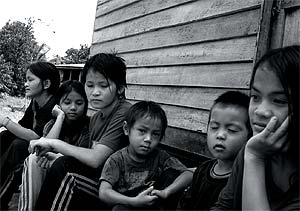 In an interview, Sarawak land rights activist Muhin Urip answered the claim that the NGOs have a private motive for their revelations.
Malaysiakini: How would you respond if state ministers repeat previous allegations that the NGOs have a ‘hidden agenda’ and are trying to damage Sarawak’s reputation, perhaps in order to get funding from foreign contributors?
Muhin Urip: The PSG has an open agenda, to bring out the voices of the oppressed, the abused. We are trying to allow the suppressed voices of the survivors of sexual exploitation to be heard. And the NGOs are proud of having this ‘hidden’ agenda.
But if, in the first place, governments and institutions exist to protect our rights and welfare and meet the needs of the people, then there would be no need for NGOs to exist, least of all to have any hidden agenda.
Suhakam and the police were asked to join the original mission, but turned us down with their respective excuses. The PSG has shown we had no intention to hide our mission. We did what we set out to do, as shown by our objectives in the report.
Why do you think police have neglected to investigate the sex crimes against the Penan?
We must look at the government actions and police inaction in a historical perspective. Firstly, Malaysians know very well that the police force is not an independent institution whose existence is solely to uphold law and order. Instead, it has become an institution that serves the ruling government to allow it to hang onto power.
In the context of the indigenous peoples’ struggle to defend their rights, the police have a history of being very biased.
Whenever police reports are made by rural communities, nothing happens. But when companies involved in disputes with communities make police reports, the police act immediately to take down blockades.
The Penan have made countless police reports against companies but there has never been any action to protect their rights. Instead, the Penan have been subjected to arrests, imprisonment and other forms of harassment – the total opposite of protection.
Over the decades, the Penan have come to consider the police untrustworthy. In this respect, I think the Penan are similar to many sectors of the Malaysian public in not trusting the police. But the Penan do not have much of a voice, compared to other Malaysians.
The PSG engaged with the police, to have a joint mission to get a better picture of how widespread sexual exploitation among the Penan is.
The public now knows that the police had no interest to discover the truth – they backed off, citing an untenable excuse of lack of funding. So it can only be expected that the police will not act, not even with the publication of this latest report, unless Malaysians speak up and hold the police accountable.
But it is not just police inaction that is troubling. It is most disturbing when the police, our supposed protectors, collaborate in trying to cover up the hideous crime of rape, as told to the fact-finding mission by villagers. The police, accompanied by an alleged perpetrator visited their village in Middle Baram.
They were looking for a rape survivor who had lodged a reportwith Bukit Aman. Another rape survivor ‘Bibi’ had already been pressured to retract her statement.
A past response from the state authorities was to say Penan rape survivors are “good story-tellers”. How would you respond to any claim that the only evidence is oral reports given to the PSG?
For the Sarawak government not to deny or dismiss this report would be original, and therefore unimaginable. They will do all that and more. Even the report by the federal Ministry of Women, Family and Community Development was dismissed. We know that several Suhakam reports on the rights of indigenous people were also ignored. There is a pattern of denial in the state government.
The PSG is opening up our report not only to share our findings, but also to expose our mission to public scrutiny.
The government can deny the findings all they want, but the federal and Sarawak governments will have to be responsible to Malaysians and the international community for their continuing inaction.
This report is just another small way for the PSG to support the people by bringing out the voices of the Penan girls and women.
Has the PSG called for an end to logging activities in the Baram areas where the alleged sexual abuse and loss of land rights is taking place?
I think the voices of the many affected middle and upper Baram Penan have been consistent since the 1980s – they have called for a halt to all logging activities on their native customary rights lands.
The Penan are not after the halt of all logging but just those on their lands. The loggers, on the other hand, are after the trees on all Sarawakians’ land.
The Penans’ legitimate and peaceful voice has been consistently ignored, and they have been insulted by the Sarawak government.
M eanwhile, the logging companies continue their government-sanctioned disregard for human decency, as they destroy the lives of Sarawakians. So the call by the Penan to halt logging is a call to all Sarawakians, Malaysians and all human rights defenders to support the people’s rights.
What terms of reference would you propose for a royal commission into the land rights of indigenous people, as the PSG report has recommended?
A royal commission would be the most appropriate mechanism to get to the root of the whole issue of land rights of Sarawak indigenous people. Land rights cannot be seen in isolation from the wider social, political, economic development and environmental factors.
In addition, it cannot be separated from the key issues of good governance, transparency and accountability. Logging, mono-crop plantations and mega-dam projects are symptoms of the wanton disregard for the rights of Sarawak’s indigenous people.
———————————————————————————————————
‘What can we do about old cases?’
Regina Lee
Jul 7, 10
6:38pm
The Sarawak police chief has rubbished a report by the Penan Support Group’s (PSG) alleging the incidence of more rape and sexual abuse cases among Penan women.
Commissioner of police Mohmad Salleh said the cases are really old and that none of the survivors had lodged police reports in the first place.
“All these cases were 10 years ago. How do you expect us to dig up all this information?” he said.
“When it happened earlier (in 2008), we also spent one whole month in the interiors of Baram and collected 72 statements. But none of (them) were the recent (cases),” he said, referring to Swiss NGO Bruno Manser Foundation’s report.
Meanwhile, Bernama reported that Mohmad also became visibly agitated when asked about the case.
“When I am asked about this, I become emotional. The police don’t hide facts. We have tried everything we could but the victims refuse to cooperate.
“The question of hiding the truth does not arise. This is a rape case. It involves the future and dignity of others. Do you really think that the police will investigate nonchalantly?”
Speaking to reporters at the state police headquarters this morning, he urged the survivors to inform the police directly of such incidents.
“If the district offices ignore them, they can come to me directly,” he said.
He also lambasted PSG, claiming it has “politicised” the issue to tarnish the image of the Sarawak police.
“If the issue is being used for political mileage, please stop it. If they really want to help them, please tell them to lodge a police report instead of (taking) it to the Parliament and telling people that the police are inefficient,” he said.
Meanwhile, the Human Rights Commission (Suhakam) refused to comment on the issue when contacted.
Commissioner Detta Samen, who is tasked with overseeing human rights adherence in Sarawak said the complaint had been lodged “one or two years ago”.
“So with the new report, I don’t know if they are highlighting new or old cases,” he said before declining to answer more questions.
‘Authorities failed to act’
PSG – a coalition of 36 NGOs – released its report ‘Wider Context of Sexual Exploitation of Penan Women and Girls in Middle and Ulu Baram, Sarawak’ in Parliament yesterday, detailing the distressing ordeal of the Penan women and the community.
The report claimed that seven more Penan women had come out to reveal their alleged sexual abuse in the hands of loggers, with some saying they became pregnant after being raped.
They also highlighted the failure of authorities to respond to the shocking findings of a national ministerial task force made several years ago.
The cabinet initially kept the task force report under wraps, until PKR Women’s chief Zuraida Kamaruddin pressured the Women, Family and Community Development Ministry to finally make it public last September.
The ministry’s task force had confirmed cases of loggers sexually abusing Penan girls and women, including a 10-year-old schoolgirl, but did not know the actual number of the cases.
Investigations at the time seemingly reached a dead end, and deputy inspector-general of police Ismail Omar closed the case due to lack of evidence and cooperation from the victims.
At the same time, many in the state government including Chief Minister Abdul Taib Mahmud had lambasted the claims as exaggerated.


Leave a Reply
You must be logged in to post a comment.